The History of Philosophy
Philosophy is that voice of the drama of history which names aloud the idol of its age: it enthrones now reason, now the state, now progress, now the human will itself — and it is the first to live through the collapse of that picture of the world when the idol shatters. This is why philosophy always moves with a double step: it builds a system, an objectification, and then, from within, it seeks a way out toward the living, toward what cannot be reduced to a scheme.
Every age reads in four beats: the living is made an idol → the idol collapses → captivity → return (a remelting, not a restoration). Below — how philosophy lived through this law, age after age.
The First Kingdoms: wisdom before philosophy
~3000–500 BC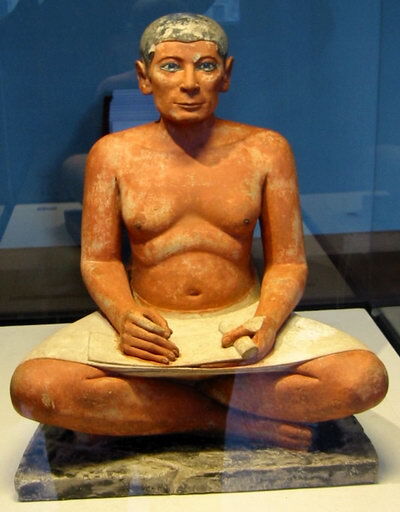
In the Ancient East there is as yet no philosophy as free questioning — there is wisdom, woven into cult, law, and the economic accounting of the deified kingdom. Thought moves in the form of parable, hymn, and instruction: the Egyptian "teachings," the Babylonian texts on the suffering of the righteous man, the Old Testament tradition of wisdom. Here man and world are understood through an unshakable cosmic and political order, in which everything has its place and its measure. This is not yet the collapse of the idol, nor its captivity, but its long, self-evident reign — the soil from which the Greek question of the ἀρχή, the beginning of all things, would later break forth.
Antiquity: the birth and the limit of reason
~500 BC–200 AD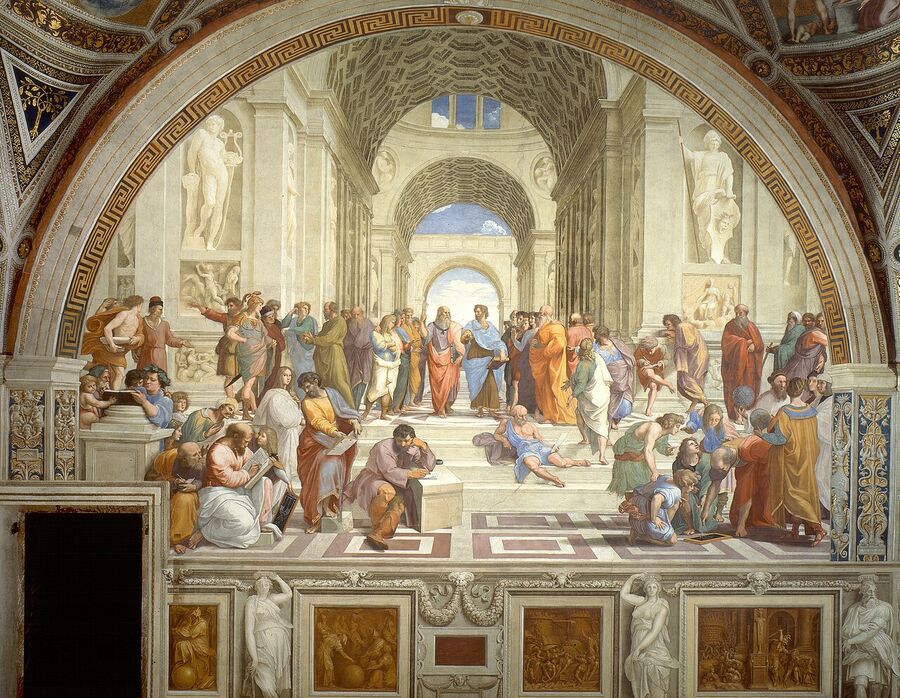
Philosophy is born among the Greeks as the audacity to ask about the beginning of all things (ἀρχή) outside of myth — from Thales and Heraclitus to Parmenides. Socrates shifts the question from the cosmos to man and perishes by the verdict of the polis; Plato, in the Republic and the dialogues, builds a world of ideas, and Aristotle, in the Metaphysics and the Nicomachean Ethics, gives reason its greatest system. But the idol of autonomous reason and of the self-sufficient polis runs up against a limit: after Alexander, and in Rome, philosophy turns toward the salvation of the individual soul — the Stoicism of Epictetus and Marcus Aurelius, Epicureanism, skepticism. Reason, having deified itself, discovers that it cannot give the soul peace — and in the Neoplatonism of Plotinus it already reaches out toward the One beyond the intellect.
The collapse of antiquity and the Christian recasting
~200–600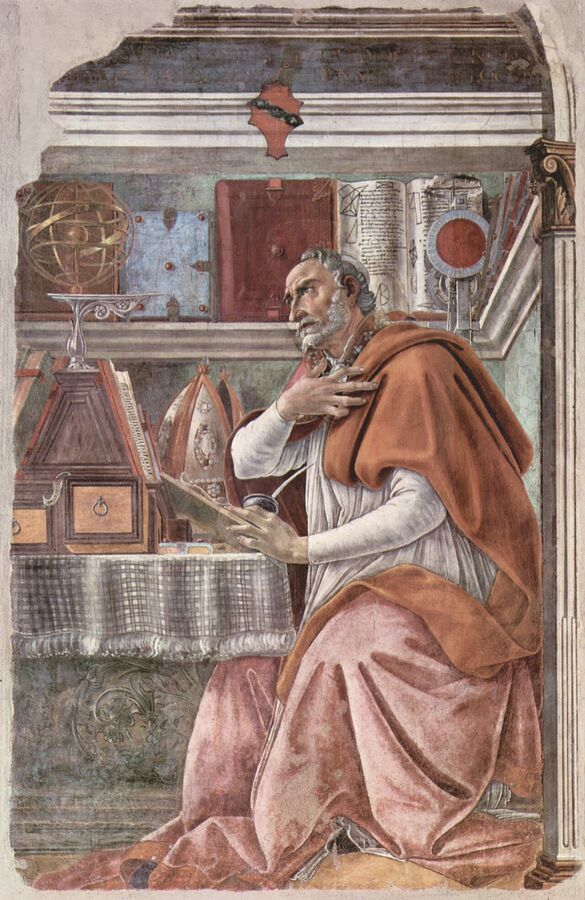
The ancient world collapses together with the picture of a self-sufficient cosmos and reason, and philosophy lives through its captivity — the old schools cannot save the soul. Christian thought does not cast off the Greek λόγος but recasts it: among the apologists and the Cappadocians, reason is set to serve faith in a personal God. Augustine, in the Confessions, turns philosophy into a confession and a history of the individual soul, and in The City of God he thinks, for the first time, history itself as the drama of two cities. Boethius, in prison, writes The Consolation of Philosophy, binding the departing antiquity to the Middle Ages to come. The return here is not a restoration of Plato but the birth of a new axis: truth understood as He who is a Person, and not as an impersonal scheme.
The medieval cathedral: faith seeking understanding
~600–1350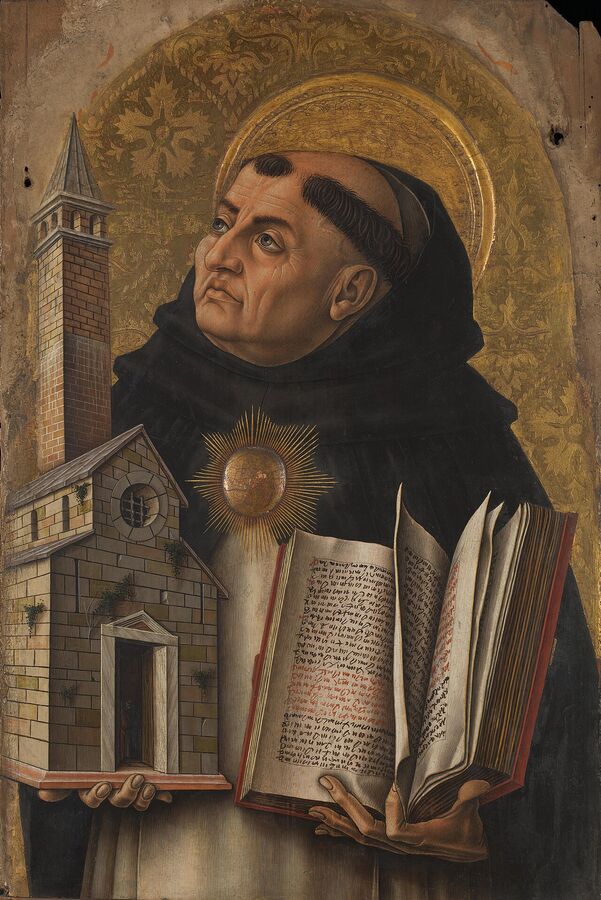
Medieval philosophy builds a cathedral in which reason serves faith: Anselm formulates "I believe in order that I may understand" and the "ontological" proof in the Proslogion. With the return of Aristotle through the Arab thinkers (Ibn Sina, Ibn Rushd), scholasticism reaches its summit: Thomas Aquinas, in the Summa Theologiae, reconciles faith and reason in a grand system. Yet already here the limit is ripening: Duns Scotus, and above all William of Ockham, with his "razor" and his nominalism, part what scholasticism had joined — the universal proves to be no more than a name, and faith and knowledge diverge. This is the quiet fracture of the idol of the unified system: reason begins to free itself, preparing both the Renaissance and the coming crisis of faith itself.
The Renaissance and the Scientific Revolution: reason becomes master
~1350–1700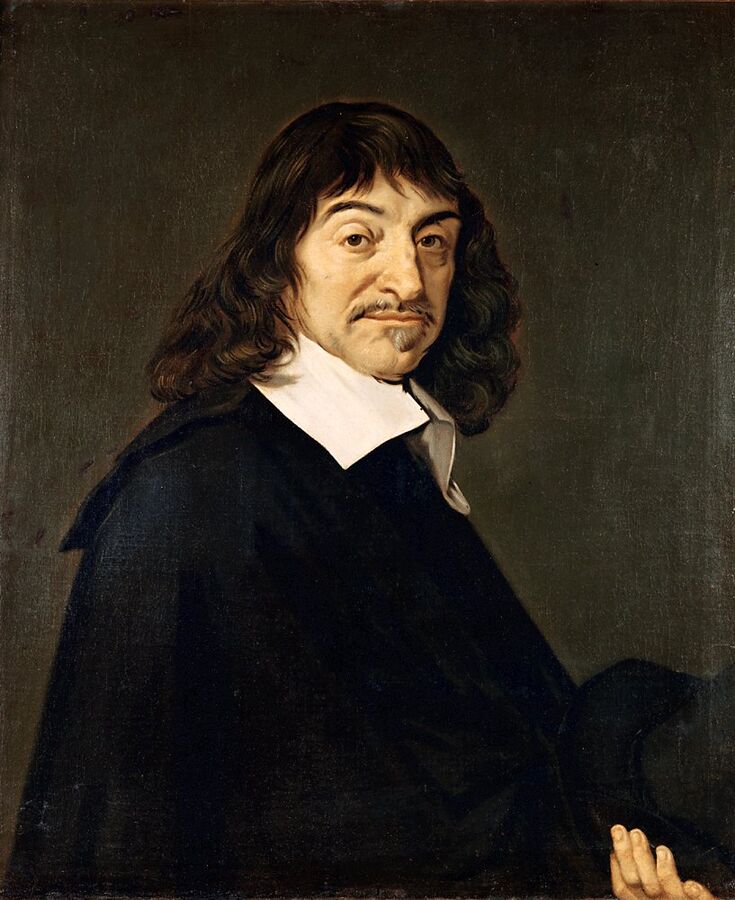
Humanism returns man to the center (Pico della Mirandola, Oration on the Dignity of Man), and the Scientific Revolution turns nature from a living creation into a measurable mechanism. Bacon, in the New Organon, proclaims that "knowledge is power," and gives induction as a method of power over nature. Descartes, in the Discourse on the Method and the Meditations, lays the thinking subject — the cogito — at the foundation of everything, and the world splits into res cogitans and res extensa. Spinoza, in the Ethics, and Leibniz, in the Monadology, build rationalist systems in which God becomes ever more a principle of the system than a Person. Here is the triumph of the new idol — of method and autonomous reason — but already with the crack of the Cartesian split, which the centuries will have to live through.
The Enlightenment and the revolutions: reason sits in judgment upon itself
~1700–1815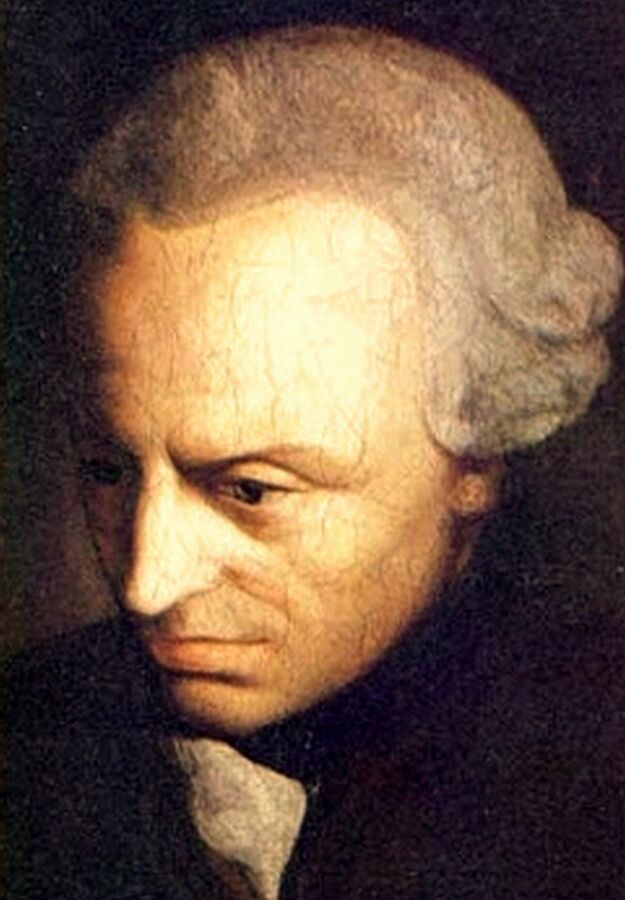
The Enlightenment raises reason to the supreme judge of faith, power, and custom: Locke grounds experience and the rights of the person, and the French philosophers carry "light" against "prejudice." But the idol of pure reason fractures from within by its own honesty: Hume, in the Treatise of Human Nature, shows that neither causality nor the "I" itself can be proved by the intellect. Kant, "awakened" by Hume, in the Critique of Pure Reason draws a boundary — reason cannot know the thing in itself — and shifts the foundation to the moral law and freedom. Rousseau, in The Social Contract and Émile, strikes at the faith in progress of civilization alone, and the French Revolution shows how the cult of reason turns into terror. Thus the age itself pronounces judgment upon its own idol, preparing the philosophy of the nineteenth century.
The nineteenth century: progress, the "death of God," and the first rebels
~1815–1914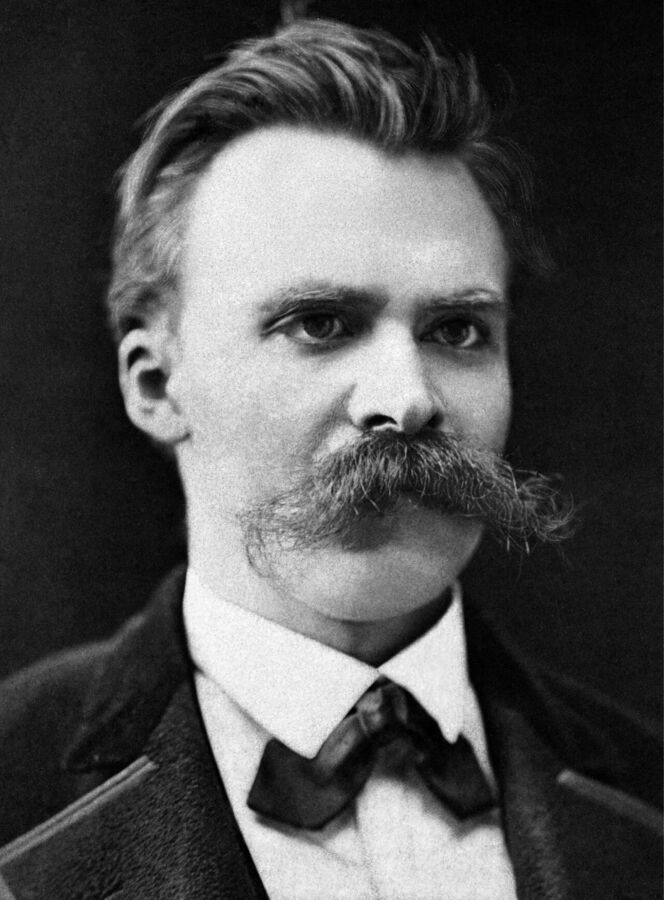
Hegel, in the Phenomenology of Spirit and the Philosophy of Right, raises up an absolute system in which all that is rational is actual, and History is the self-unfolding of Spirit. From this idol grow its heirs: Marx turns Hegel over, declaring the engine of history to be material production and class. But against the dissolution of the living person into the System and Progress, solitary figures are the first to rise: Kierkegaard defends the single "existing" man before God, and Nietzsche, with his diagnosis "God is dead," lays bare the emptiness that remains after the fall of the Christian idol — and warns of nihilism. In Russia a religious philosophy of history is born: Vladimir Solovyov seeks all-unity and the justification of the good, setting the theme that the tragic twentieth century will take up.
The twentieth century: the collapse of utopias, the captivity of ideologies, the witnesses
~1914–1991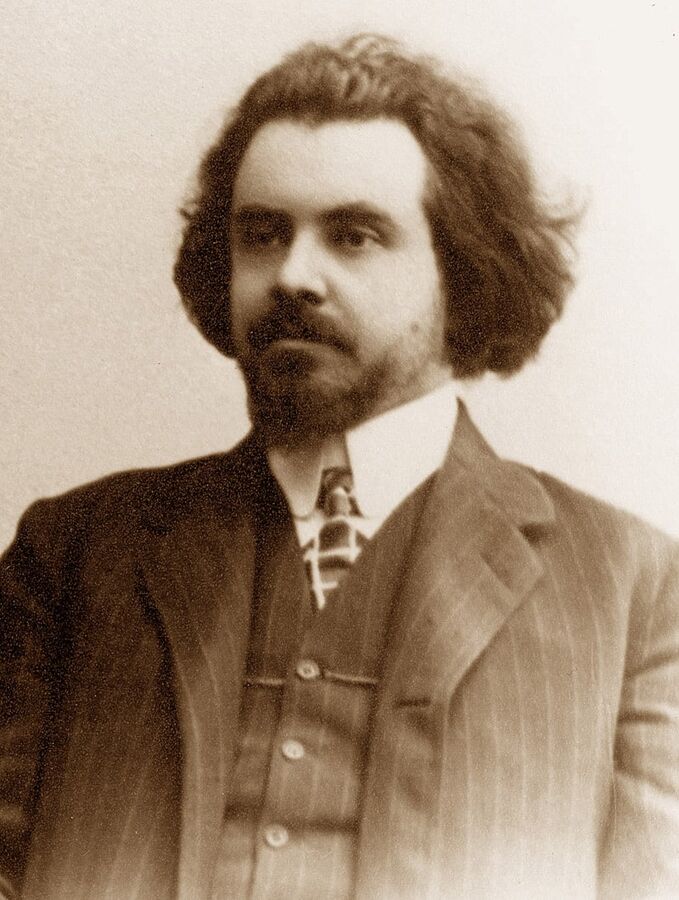
The world wars and the totalitarianisms lay bare the price of the idol of the System: reason, having deified itself, turns into the camp. Heidegger, in Being and Time, poses anew the question of being and of the thrownness of man, yet he himself is compromised by the age; Sartre makes freedom and responsibility the center of existentialism. Against the objectification of man the witnesses rise up: Hannah Arendt analyzes The Origins of Totalitarianism and the "banality of evil"; Viktor Frankl, out of the experience of the concentration camp, writes of the search for meaning as the last irreducible freedom. Russian religious philosophy in exile (Berdyaev, The Meaning of History) thinks history as the drama of freedom and creativity, and not as automatic progress. In parallel, analytic philosophy (Wittgenstein) withdraws into the rigorous analysis of language — another answer to the collapse of the great systems.
After the ideologies: the end of the grand narratives
1991–
With the collapse of the communist project, the last of the great ideology-systems vanishes, and there comes an age that reason itself is inclined to proclaim the "end of history" (Fukuyama's thesis, contested). Postmodernity (Lyotard, The Postmodern Condition) proclaims incredulity toward the "grand narratives" — but the place set free is threatened by new idols: the market, technology, the total objectification of man in data. The philosophy of the twenty-first century lives by this tension: ethics in the face of biotechnology and artificial intelligence, the search for the foundations of morality after the fall of the absolutes, the return of the religious question. The beat of the "return" here is not yet completed and honestly remains open: this is not a finished system but an unfinished search for the way back — toward the person, who cannot be reduced to a scheme, a thing, or a number.
The spine of it all — the arc.