The History of Literature
The history of literature is the voice of the drama of the law: in every epoch a human being makes himself an idol (reducing the living to a thing, a scheme, a force), and the word is the first to sense the collapse — it gives a tongue to lament, to tragedy, and to conscience, it denounces the idol, and it keeps the memory of what has been melted down.
Every age reads in four beats: the living is made an idol → the idol collapses → captivity → return (a remelting, not a restoration). Below — how literature lived through this law, age after age.
The First Kingdoms: the word before the face of death and God
~3000–500 BC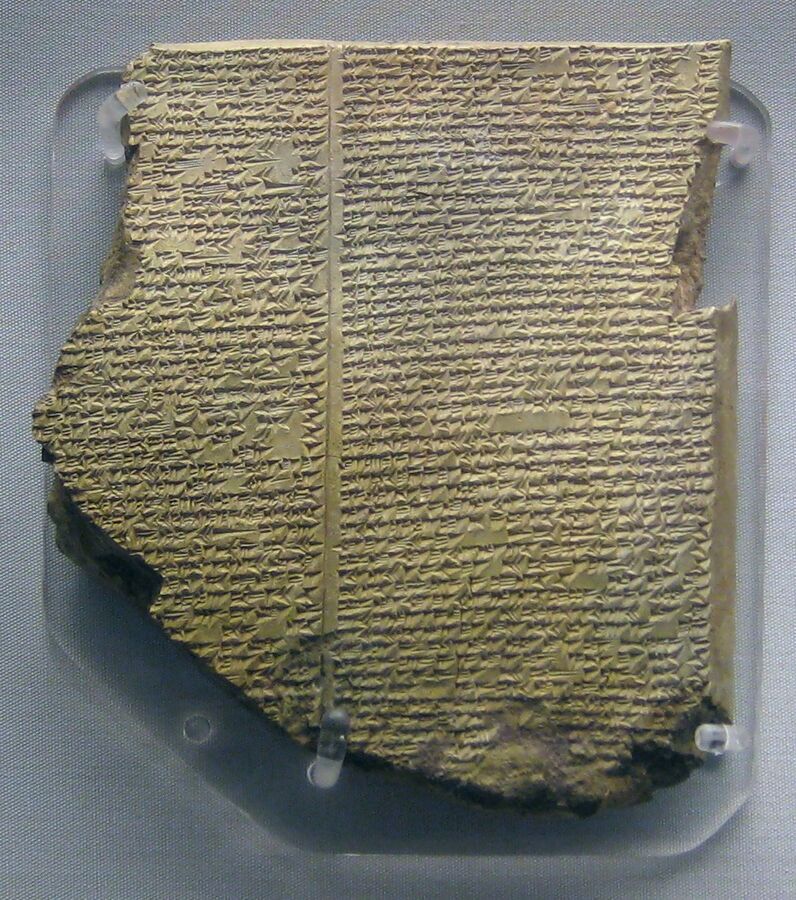
The most ancient literature is born where a human being comes up against the limit of the thing: Gilgamesh builds walls and seeks immortality — and receives only the memory of a friend's death and of the flood. The Sumerian "laments" over ruined cities give catastrophe its first voice of grief. In Israel the idol is overturned from within: the prophets (Isaiah, Jeremiah) denounce the kingdom and the temple that have become ends in themselves, and the Babylonian captivity becomes a school of return to God. At the frontier of the Greek world Homer already hears the same note — wrath, the death of heroes, and the fragility of glory beneath the walls of Troy.
Reading
The king of Uruk makes immortality his idol — he wants to overcome the mortal nature of things just as he overcame walls and monsters. Collapse comes with the death of his friend Enkidu: might does not save from decay, and the flower of eternal life he has won is stolen by a serpent. The return here is modest but real — Gilgamesh accepts his mortality and leaves as his memorial not the immortality of the body, but the city he built and the story he told.
Reading
One of the oldest texts in which catastrophe first finds a language of grief: the gods forsake the city, and the destruction of Ur is mourned as the taking away of life itself. The idol here is the city's permanence and the protection of the goddess Ningal, who could not hold back fate. The lament grants no return, but by the very act of mourning it preserves the memory of what once was living — and in this lies literature's first gesture against oblivion.
Reading
The prophet denounces Israel's chief idol — the temple and sacrifices turned into ends in themselves amid injustice and oppression: ritual without righteousness is loathsome to God. He foresees the collapse — captivity and desolation — but through it the return sprouts: the promise of a "remnant," of a new exodus, and of the Servant who bears the guilt of others. Here the law is turned inward for the first time: it is not the strength of the kingdom that saves, but faithfulness and mercy.
Reading
Jeremiah is the very voice of captivity: he foretells the fall of Jerusalem and lives through it, and in the "Lamentations" he mourns the burned city, whose idol — the certainty of the temple's inviolability ("the temple of the Lord is here") — has collapsed. For him collapse is not an end but a remelting: he speaks of a new covenant inscribed not in stone but in the heart. Return is conceived through repentance, not through the restoration of the former thing.
Reading
The "Iliad" unfolds the law in its pure form: the wrath of Achilles, who has made wounded honor his idol, leads to a tide of deaths, until the death of Patroclus and the meeting with the weeping Priam remelt fury into pity. The "Odyssey" is a long homecoming, where the hero loses everything and everyone in order to return already changed. The glory of heroes is shown to be fragile and mortal — Homer's greatness lies in his mourning even his enemies.
Antiquity: tragedy as the judgment of pride
~500 BC–200 AD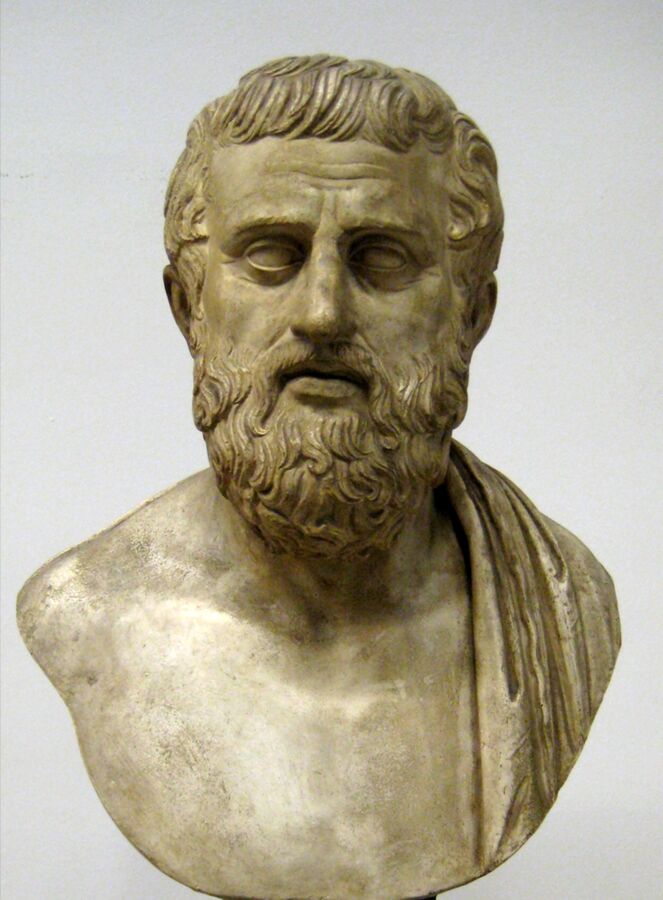
Greek tragedy is the purest organ of the law: Aeschylus, Sophocles, and Euripides set the human being before fate, where pride (hubris) leads inexorably to collapse and to insight through suffering. Oedipus, who blinds himself, and Antigone, who rises against the decree, show how the living resists the scheme of power. In Rome Virgil builds an epic of imperial destiny, yet through the Aeneid there also runs the cost of that destiny — the "tears of things." Ovid, in the Metamorphoses, gathers the world as unbroken transformation, and himself ends in exile — a poet in the captivity of power.
Reading
The "Oresteia" leads an entire lineage through the law: blood vengeance as an idol of justice breeds a chain of murders — Agamemnon, Clytemnestra, Orestes — and the captivity of guilt seems endless. The collapse is resolved by a return on a new level: the goddess Athena establishes a court (the Areopagus), and blind vengeance is remelted into the measured justice of law. Thus tragedy shows the way out of the vicious circle not by abolition, but by the transfiguration of justice.
Reading
"Oedipus the King" is a model of how the idol of one's own reason and omniscience leads to collapse: Oedipus, uncovering the mystery, finds the criminal to be himself and blinds himself, gaining inner sight through the loss of vision. "Antigone" sets the king's decree against the unwritten law of conscience: Creon, who has made the will of the state his idol, loses everything. In Sophocles the return is a bitter wisdom, bought with suffering.
Reading
Euripides shows collapse when reason tries to suppress the elemental and is defeated: Medea, betrayed by Jason, makes vengeance her idol and steps over the most living thing of all — she kills her own children. In the "Bacchae" the sober king Pentheus denies the god Dionysus and is torn apart by the bacchantes, among them his own mother in her frenzy. There is almost no return — Euripides leaves the spectator before the abyss of the repressed, avenging element.
Reading
The "Aeneid" builds up the idol of imperial destiny: Aeneas sacrifices his personal happiness for the founding of Rome, and everything is subordinated to the higher mission. But through the epic run the "tears of things" (lacrimae rerum) — the price of this destiny: the abandoned Dido, fallen comrades, blood in the finale. Return is conceived as the finding of a new homeland, but Virgil does not conceal that the order of Rome is bought with loss and sorrow.
Reading
The "Metamorphoses" gather the whole of myth as continuous transformation — a world where all that is living freezes into a new form (a human into a tree, a bird, a stone), and this is the reverse side of the law: the reduction of the living to a thing here is literal. Ovid himself ends in captivity — exiled by Augustus to the edge of the empire, he writes from banishment. His fate — a poet turned by power into an exile — rhymes with the theme of his poem.
The collapse of the ancient world and the Christian recasting
~200–600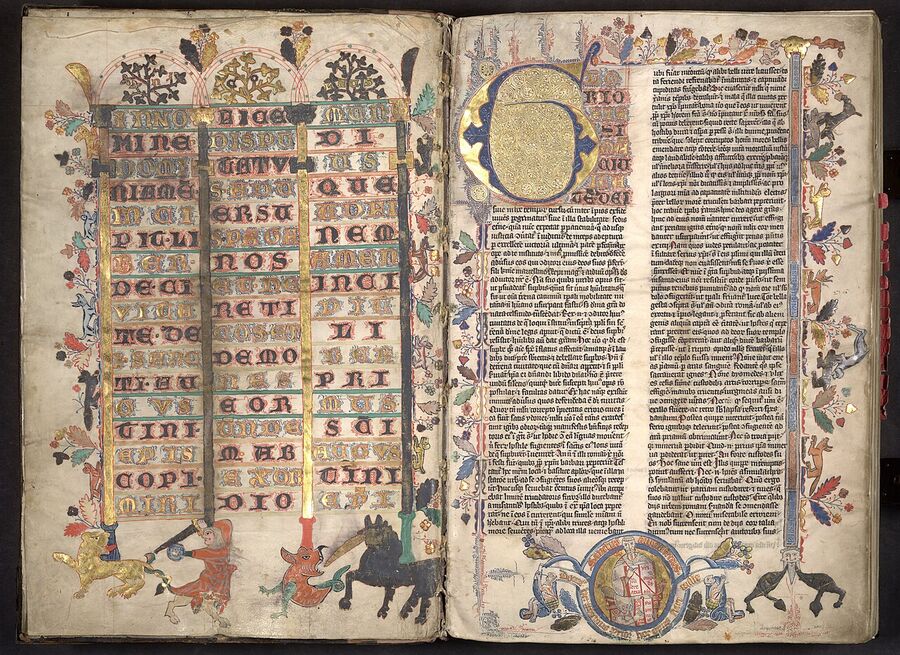
When "eternal" Rome falls, the word turns inward, into the human being. Augustine, in the Confessions, invents a new genre — the story of a soul passing from the captivity of the passions to conversion — and this is the first autobiography of conscience in the European tradition. In response to the sack of Rome he writes The City of God, separating the earthly city from the heavenly one. Alongside this hagiography is born — the saint's life, where the hero is no longer a warrior but a martyr and an ascetic, and memory keeps not glory but holiness. Boethius, awaiting execution, writes The Consolation of Philosophy — reason, before the face of collapse, seeks a support higher than fate.
Reading
The "Confessions" is the first autobiography of conscience: Augustine tells how he lived in captivity to passions and ambition, having made pleasure and glory his idols, until he came to conversion ("take up and read"). The collapse here is inward — the yearning of a heart that knows no rest outside God. The return is given as a remelting of a whole life: the memory of sin becomes not a shame, but a witness to mercy.
Reading
"The City of God" is a direct response to collapse: pagans blamed Christians for the fall of Rome (410 AD), and Augustine answers by dividing two cities — the earthly, living by love of self, and the divine, living by love of God. The idol of "Eternal Rome" is debunked: no earthly kingdom is eternal; eternal is only the heavenly City. Thus the catastrophe of the empire is remelted into a new support — hope beyond the bounds of history.
Reading
"The Consolation of Philosophy" was written in prison, awaiting execution: Boethius's reason, stripped of power, wealth, and freedom, meets collapse face to face. The idol is the gifts of Fortune, which he had considered his own; Philosophy (in the figure of a Lady) shows that they never belonged to him at all. The return is the finding of a support above the wheel of Fortune: the true good is inalienable, and reason finds peace in the higher order.
Reading
The lives of martyrs and ascetics carry out a quiet revolution of the hero: in place of the warrior and the king stands the saint, whose victory lies in defeat, in a life given for the faith. The idol of worldly glory and strength is here directly overturned — the one who endures proves to be the strong. Memory preserves not the feat of conquest, but faithfulness unto death, and in this the life of a saint already bears the whole law: the collapse of the body as a return to eternal life.
The medieval cathedral: the epic of fidelity and the "Comedy" of the way
~600–1350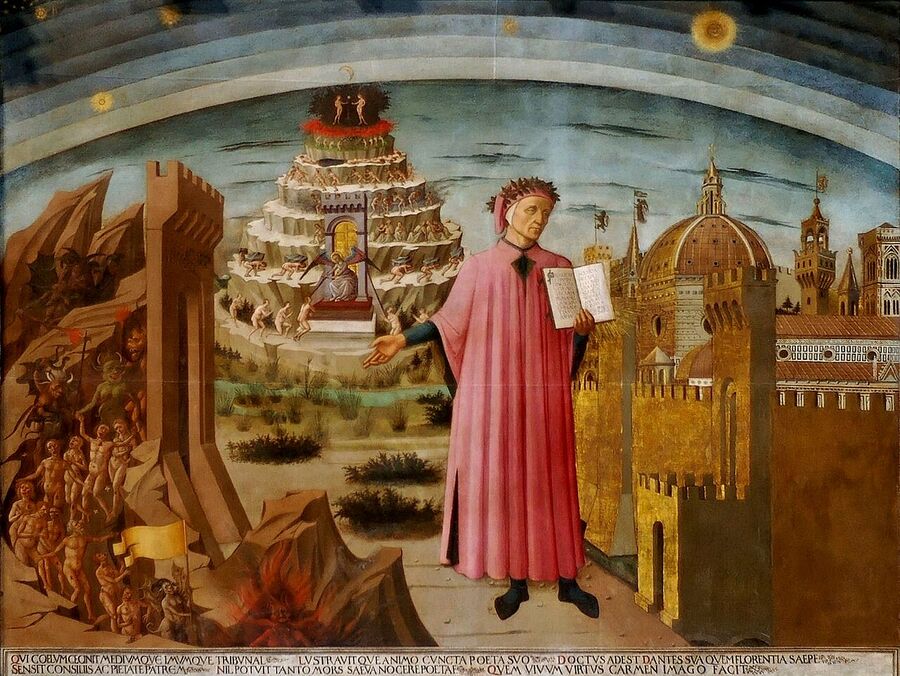
The medieval word is built like a cathedral: the heroic epic sings of fidelity and sacrifice — Roland dies for having failed, out of pride, to sound his horn in time, and his death becomes an image of fidelity to the end. The Russian Tale of Igor's Campaign mourns a prince's defeat as a lesson in discord and calls for unity. The summit of the age is Dante's Divine Comedy, where the whole drama of the law is drawn together into a single way: hell as the captivity of sin, purgatory as the recasting, paradise as the return. Thus medieval literature holds the entire vertical — from the fall to the ascent.
Reading
The idol here is knightly honor and pride: out of pride Roland refuses to sound the horn Oliphant in time and calls for help only when his troop is already doomed. The collapse is the death of the rearguard in the pass of Roncevaux, the price of pride. But the poem remelts the defeat into an image of faithfulness to the end: Roland's death is not a disgrace but a sacrifice, and his memory becomes a sacred thing.
Reading
The poem mourns the defeat of Prince Igor, whose idol is the thirst for personal glory that drove him to war without alliance with the other princes. The collapse is rout and captivity, and Svyatoslav's "golden word" turns a private defeat into a lament over the discord of the whole Russian land. The return is sketched by Igor's flight from captivity and the call to unity — literature draws a lesson from calamity.
Reading
"The Divine Comedy" draws the whole law into a single journey of a single soul: Hell is the captivity of sin, where each sinner is forever frozen in the shape of his passion (an idol turned into an eternal thing); Purgatory is remelting, ascent, and purification; Paradise is the return to Light and Love. Dante, himself an exile, leads himself through this as well. It is the most complete artistic embodiment of the drama of fall and ascent.
Reading
"The Canterbury Tales" take as their frame a pilgrimage to the tomb of Thomas Becket — a movement toward a shrine — but fill it with a motley, earthly, often sinful human crowd. The idol of the age — the order of estates and the pious façade — Chaucer tests with irony, laying bare the greed, lust, and hypocrisy beneath it. Return remains a horizon: the way to the shrine passes through the whole truth of fallen, living human nature.
The Renaissance and the Scientific Revolution: the human being as the measure, and its fracture
~1350–1700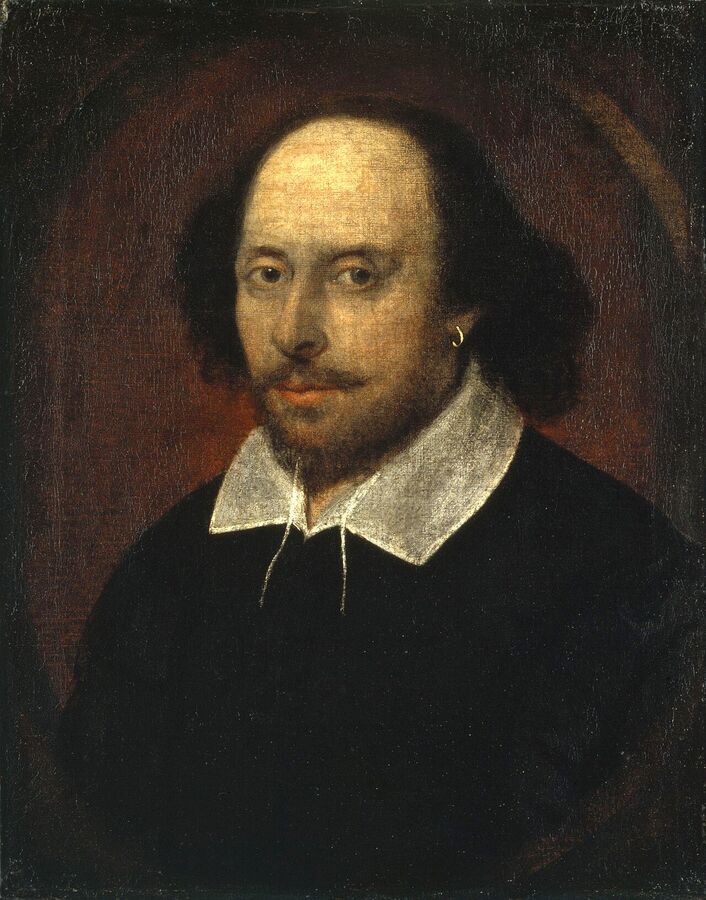
The Renaissance makes the human being himself into an idol — his will, his passion, his reason — and at once tests that idol to the breaking point. Petrarch opens the lyric of inner division; Cervantes, in Don Quixote, shows a noble madness shattering against coarse reality, and gives birth to the novel of the modern age. Shakespeare carries the tragedy of the will to its limit: Hamlet, Lear, Macbeth are the collapse of a human being who has believed in his own boundlessness. Milton, in Paradise Lost, returns everything to the first idol — the pride of Satan — and seeks to "justify the ways of God to men."
Reading
The "Canzoniere" opens up the lyric of inner division: the poet is torn between earthly love for Laura and care for the salvation of his soul, between glory and repentance. The idol is the beloved herself and the thirst for poetic glory, deified by feeling. The collapse is experienced as the unrest of conscience; the return only glimmers in the final address to the Virgin — but it is precisely this unresolved division that gives birth to a new, self-conscious European lyric.
Reading
"Don Quixote" makes an idol of a bookish dream: chivalric romances so possess the hero that he substitutes them for reality — mistaking windmills for giants. The collapse is the constant battering of reality against the noble illusion, and in the finale insight comes together with death, when Alonso Quixano renounces chivalry. Cervantes gives birth to the novel of modern times as the gap between dream and world — and he treats his madman with love.
Reading
The great tragedies push to the limit the idol of the human will that has come to believe in its own boundlessness: Macbeth makes power his idol and drowns in blood; Lear makes it pride and flattery, and gains insight only in madness and destitution; Hamlet breaks under the weight of thought and revenge. The collapse is total, but through it a return to truth shows through — its price in Shakespeare is almost always death and insight on the threshold of ruin.
Reading
"Paradise Lost" traces the drama back to the first idol — the pride of Satan, whose "better to reign in Hell than serve in Heaven" is the purest formula of self-deification. The collapse is the fall of the rebel angels and the fall of man; the captivity is the expulsion from Eden. But Milton inscribes the return as well: the promise of redemption, a "paradise within thee, happier far," and the declared aim — to "justify the ways of God to men."
The Enlightenment and the Revolutions: reason-as-idol and its satire
~1700–1815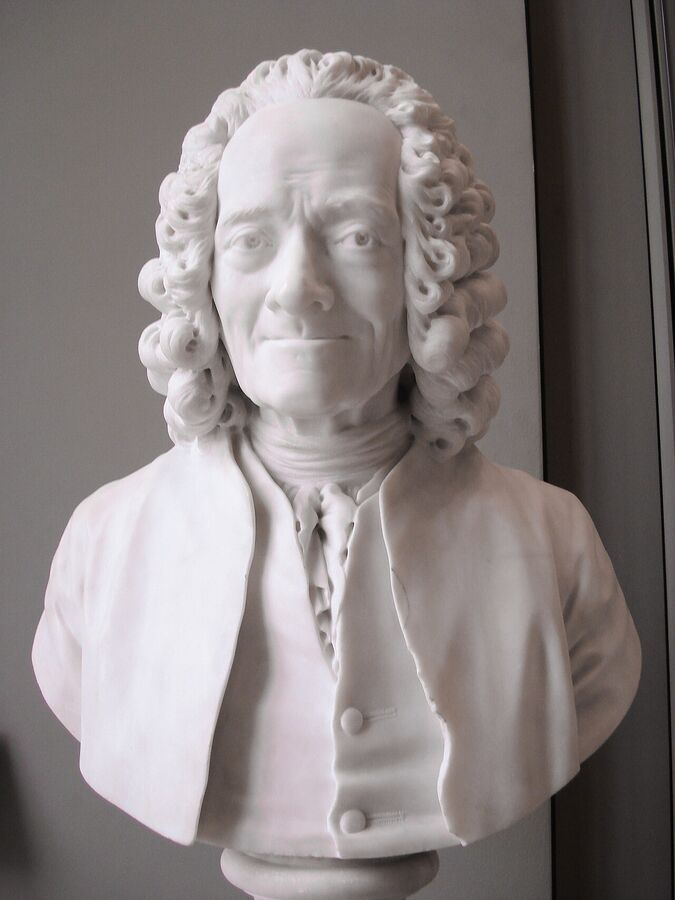
The Enlightenment sets up Reason as its idol — and satire tests it at once: Swift, in Gulliver's Travels, mocks the complacency of "rational" humankind; Voltaire, in Candide, shatters optimism with the formula "we must cultivate our garden." Against dry rationality rise sentimentalism and the Sturm und Drang: Rousseau and the young Goethe give the voice back to feeling, and The Sorrows of Young Werther becomes the confession of a wounded soul. Goethe then spends his whole life writing Faust — the drama of knowledge that has sold itself, and of a possible salvation through tireless striving.
Reading
"Gulliver's Travels" is a satire that tests the idol of "rational" humanity to the breaking point: among the Lilliputians greatness turns out to be petty, among the giants man is a vile insect, and in the land of the Houyhnhnms the "rational" horses denounce the human breed itself (the Yahoos). The collapse is Gulliver's bitter insight, reaching as far as misanthropy. Swift withholds the return: his hero comes home, but can no longer bear people — a warning about the pride of reason without humility.
Reading
"Candide" shatters the idol of philosophical optimism — the doctrine that "all is for the best in this best of all possible worlds": earthquakes, wars, and executions rain down on the hero, and Pangloss's Leibnizian scheme falls apart in the face of real evil. The collapse is the ruin of a ready-made formula of the world's order. The return is modest and sober: "we must cultivate our garden" — not to build a system of the world, but honestly to do one's own small work.
Reading
"The Sorrows of Young Werther" is a confession of feeling against dry reason: Werther makes an idol of unrequited love and of his own vulnerable soul, giving himself to passion without measure. The collapse is suicide, to which he is led by the inability to fit the boundlessness of feeling into life. There is no return — and in this lies an indictment of the age: the novel became the voice of a whole generation that recognized itself in this ruin, and "Werther fever" swept across Europe.
Reading
"Faust" is the drama of knowledge that has pawned its soul: the scholar, for whom all wisdom is not enough, makes an idol of the fullness of experience and power and strikes a wager with Mephistopheles. Collapse and captivity pass through the story of Gretchen and the pursuit of the moment one wishes to halt. But Goethe grants a return: Faust is saved not by sinlessness but by tireless striving — "whoever strives ever onward, him can we redeem" — and the remelting takes place through unresting deed itself.
Reading
"Julie, or the New Heloise" restores the rights of the heart against the conventions of estate and reason: the love of Julie and Saint-Preux is an idol of feeling raised to the highest value. The collapse is the impossibility of uniting passion and duty; Julie submits to a marriage arranged by her father, remelting love into virtue. The return is sentimentalist — not in happiness, but in the moral transfiguration of feeling; the novel became a manifesto of the new sensibility.
The nineteenth century: the novel of conscience
~1815–1914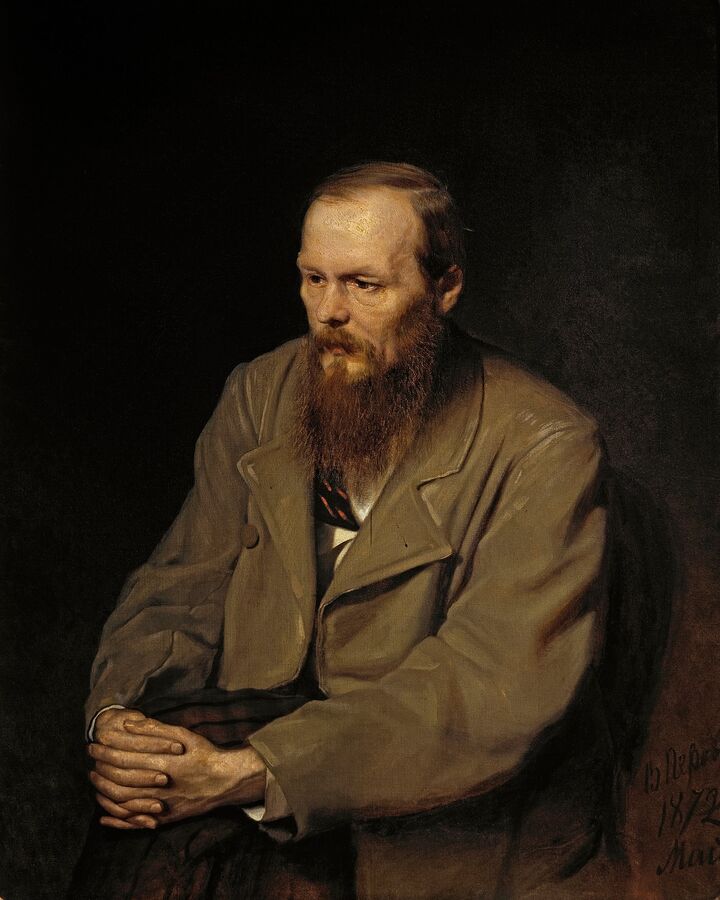
The nineteenth century brings the novel to the pitch of an organ of conscience. Dostoevsky sets a human being who has made an idea his idol ("am I a trembling creature") to pass through crime to resurrection — Crime and Punishment, The Brothers Karamazov. Tolstoy judges the idol of high society and pride (Anna Karenina) and seeks the simple truth of life and death (War and Peace, The Death of Ivan Ilyich). Dickens and Hugo give a voice to the humiliated: Les Misérables is a whole epic of mercy against the letter of the law. The realism of Flaubert and Balzac lays bare the idol of money and of bourgeois illusion.
Reading
"Crime and Punishment" sets up an idea as idol: Raskolnikov divides people into "trembling creatures" and those "having the right," and by murder tests the theory — collapse sets in instantly, for one can step over the law, but not over one's own conscience. "The Brothers Karamazov" unfolds the same law communally, through Ivan's rebellion and "everything is permitted." The return is the resurrection of the soul through suffering, Sonya's love, and hard labor as a remelting, not a punishment.
Reading
"Anna Karenina" judges the idol of passion and high society: Anna sacrifices living life to the feeling that has seized her and perishes, while beside her Levin seeks the simple truth of labor and faith. "War and Peace" debunks the idol of Napoleon and "great men," opposing to them the imperceptible "swarm" life of the people and the truth of death that opens to Prince Andrei. In Tolstoy the return lies in the renunciation of the pride of the mind for the sake of living, natural being.
Reading
"Les Misérables" is an epic of mercy against the law of the letter: the escaped convict Jean Valjean, having stolen bread and been enlightened by the bishop's forgiveness, spends his whole life fleeing the inspector Javert — the embodied idol of law without mercy. The collapse overtakes Javert himself: confronted with mercy, he cannot contain it and perishes. The return is Valjean's transfiguration into a saint, proof that man is saved not by the letter, but by love.
Reading
"Great Expectations" is a novel about the collapse of a false idol: Pip receives a secret fortune and makes an idol of being a gentleman and of his love for the cold Estella, ashamed of simple goodness — the blacksmith Joe. The ruin comes with the discovery that his benefactor is an escaped convict, and that the "great expectations" are built on an illusion. The return is insight and humility: Pip learns anew to value the living faithfulness he had betrayed for the sake of an empty glitter.
Reading
"Madame Bovary" lays bare the idol of the bookish, bourgeois dream of a beautiful life: Emma, having filled herself with novels, demands passions and luxury from the drab provinces, betrays and falls into debt. The collapse is ruin and suicide, to which she is led by the captivity of an illusion that could not withstand its collision with everyday life. There is no return — Flaubert shows with cold precision the ruin of one who confused living life with a dream of it.
The twentieth century: utopias, totalitarianisms, and the voice of the martyrs
~1914–1991
The twentieth century builds the idol of the System, which reduces the human being to a number — and literature becomes witness and accuser. Kafka senses in advance the impersonal machine of guilt (The Trial); Orwell, in 1984, carries the idol of the state-as-scheme to its formula. Against oblivion rises the voice of the martyrs: Solzhenitsyn, in The Gulag Archipelago, returns millions to memory; Akhmatova, in Requiem, gives voice to the lament of those standing in the prison lines; Mandelstam perishes as a poet of resistance; and Celan, in "Death Fugue," finds words for that which is passed over in silence. Here literature does the very thing for which it exists — it keeps the living name against the scheme.
Reading
"The Trial" senses in advance the idol of the impersonal System: Josef K. is arrested without being told his crime and is judged by an unreachable, absurd apparatus in which man is reduced to a case without a face. The collapse is total and inexplicable — the hero perishes "like a dog," never learning the charge. There is no return: Kafka leaves the reader inside the captivity of the machine of guilt, thereby giving the twentieth century its most precise prophetic image.
Reading
"1984" pushes the idol of the state-as-scheme to the limit: the Party rewrites the past, breaks language (Newspeak), and demands love for Big Brother, reducing man to a function. The collapse is the crushed revolt of Winston Smith, whose attempt to preserve memory and love ends in torture in Room 101 and inner betrayal. There is deliberately no return: the novel is a warning, showing a captivity without exit so that the reader will not let it come true.
Reading
"Requiem" is the lament of a mother and of a whole people who stood in the prison lines of the era of terror: the idol of the state-machine reduces living people to lists for arrest. The collapse here is a personal grief (a son in prison) raised to a common fate. The return is the witness itself: Akhmatova promises to preserve the memory of "all who stood here with me," turning the mute line into a sounding voice against oblivion.
Reading
The "Voronezh Notebooks" were written in exile, to which the poet was banished after his verses against the leader — it is a voice of resistance unbroken by captivity: even in banishment and destitution the word remains free and alive. The collapse is the poet's death (he died in a transit camp in 1938), the captivity is exile itself. The return is accomplished posthumously, through the verses preserved by his widow: the scheme wanted to erase the name, but the word outlived it.
Reading
"Death Fugue" finds a language for the unspeakable — for the extermination camps, where man is reduced to smoke ("a grave in the clouds"). The idol of the race-machine is pushed to the limit, where murder becomes a craft ("death is a master from Germany"). There is no return in the consoling sense, but the very birth of these words is an act of memory against silence: poetry bears witness where the word had seemed already impossible.
Reading
"The Gulag Archipelago" is an "experiment in literary investigation" of the camp system, an idol that ground millions into numbers and statistics. The collapse and the captivity here are the very history of the country, and the book is assembled from the testimonies of survivors. The return is the resurrection of memory: Solzhenitsyn names names and fates, tearing them out of anonymity, and in this literature does what it exists for — it preserves the living against the scheme.
After the ideologies: the word amid the shards
1991–After the collapse of the great ideologies literature enters the age of shards: the place of a single drama is taken by irony, the market, and the flood of information, and the new idol becomes the entertaining noise itself. Part of writing withdraws into play and the postmodern; part into the stubborn work of memory and testimony (documentary prose, autofiction, testimonies of the genocides and catastrophes of the twentieth century). This epoch is not yet finished, and so it is more honest to describe it as a search: the voice is seeking what to answer to the captivity of dispersion — with authenticity, with attention to the living face, with a return to the question of meaning. The outcome of this beat is still open.
The spine of it all — the arc.